What is root canal treatment?
Inside every tooth is a living tissue called the pulp, which contains nerves and blood vessels. This tissue can be affected by deep decay, cracks or injuries, leading to inflammation or infection.
When root canal treatment becomes necessary, I reach the canals inside the roots of the tooth, remove the affected tissue, then clean, shape and fill the canals with materials made for this purpose.
The aim of treatment is to deal with the infection or inflammation and to keep the natural tooth instead of extracting it, when its condition allows.
To relieve pain and help preserve your natural tooth.
Inside a tooth
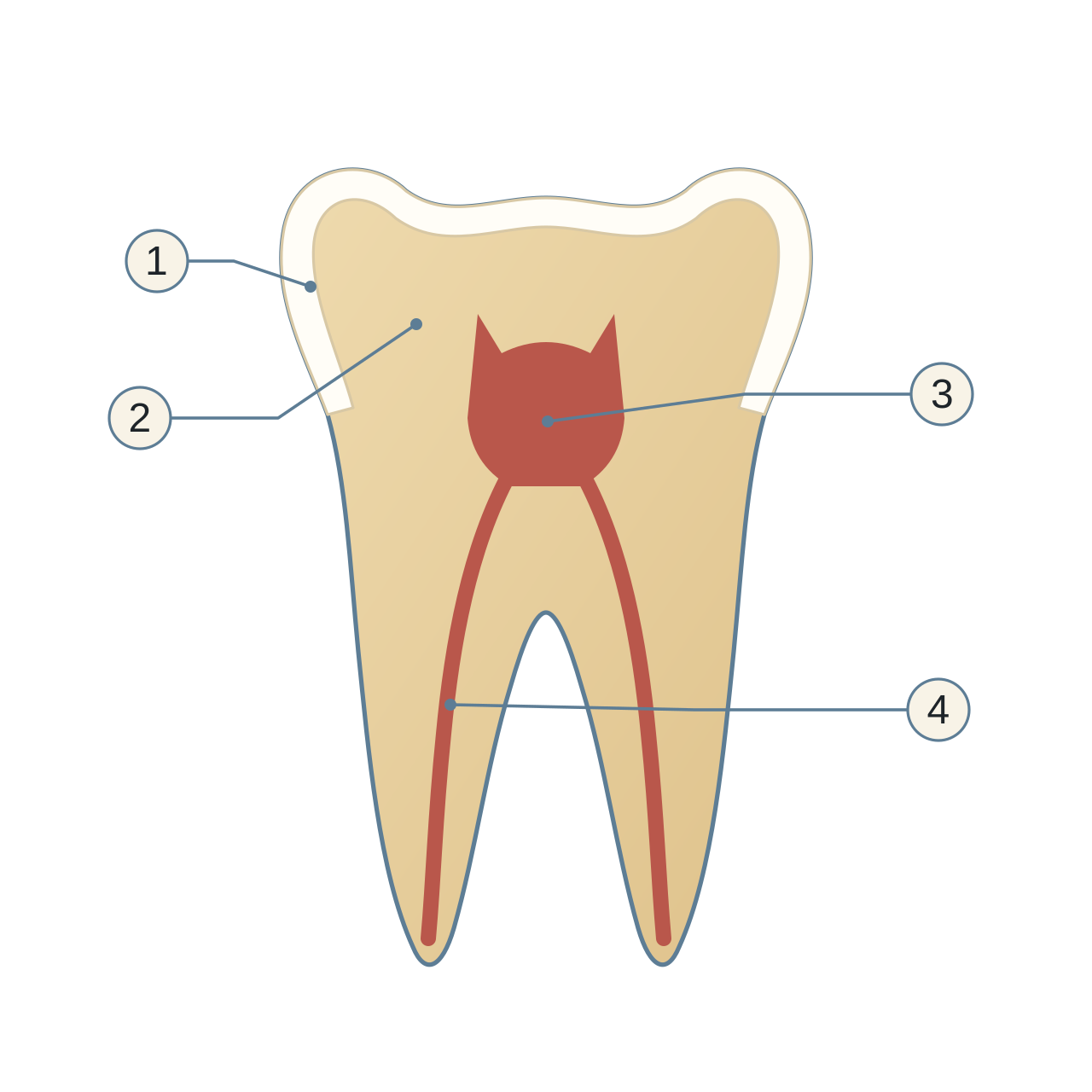
- Enamel
Covers the crown.
- Dentine
Forms most of the tooth.
- Dental pulp
Tissue containing nerves and blood vessels.
- Root canal
The pulp space within the root.
When does a tooth need root canal treatment?
A tooth may need root canal treatment when the pulp has an inflammation that is not expected to heal, or when it has lost its vitality and become infected.
Signs may include:
- Constant or recurring pain in the tooth.
- Severe or prolonged sensitivity to cold or hot.
- Pain when chewing or pressing on the tooth.
- Swelling or an abscess near the tooth.
- A change in the colour of the tooth after an injury or accident.
However, these symptoms do not necessarily mean a root canal is needed, and some teeth that do need treatment may cause no pain at all.
For this reason, the need for root canal treatment cannot be decided from symptoms alone; the decision requires a clinical examination, diagnostic tests and X-rays when needed.
Can the dental pulp be preserved?
Yes, in some cases.
Not every deep cavity or exposure of the pulp means a full root canal is needed. It may be possible to preserve the vitality of the pulp with a vital pulp therapy procedure, such as direct pulp capping, removing part of the pulp, or removing the whole coronal pulp, if the case is suitable.
The choice depends on the diagnosis, the condition of the pulp and whether the tooth can be restored, not on the depth of the decay alone.
How is root canal treatment done?
The details vary with the tooth, the number and shape of the canals and the condition of the tissues around the roots, but the main steps include:
1. Examination and diagnosis
I start by reviewing the symptoms and carrying out a clinical examination, pulp and periapical tests, and assessing the X-rays to identify the problem and plan the treatment.
2. Local anaesthesia
Treatment is done under local anaesthesia, after making sure it is effective before starting. Some severely inflamed teeth may need additional anaesthetic techniques. Treatment is not started until the patient is adequately numb.
3. Isolating the tooth with a rubber dam
The tooth is isolated with a rubber dam to protect it from contamination by saliva, and to protect the patient from cleaning solutions or instruments entering the mouth during treatment.
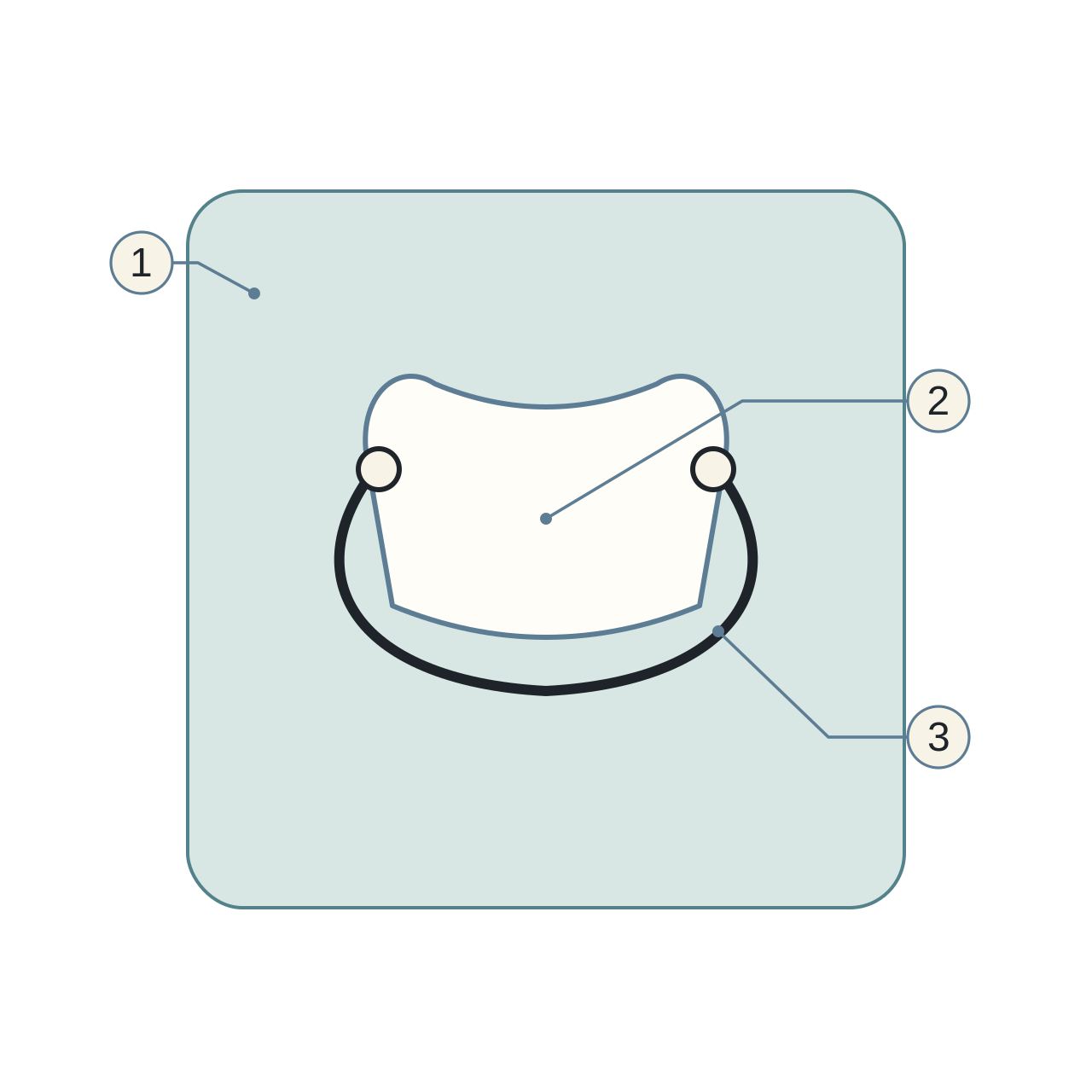
- Rubber dam
Isolates the tooth from the rest of the mouth.
- Isolated tooth
A simplified view from above.
- Clamp
Helps retain the dam.
4. Reaching the root canals
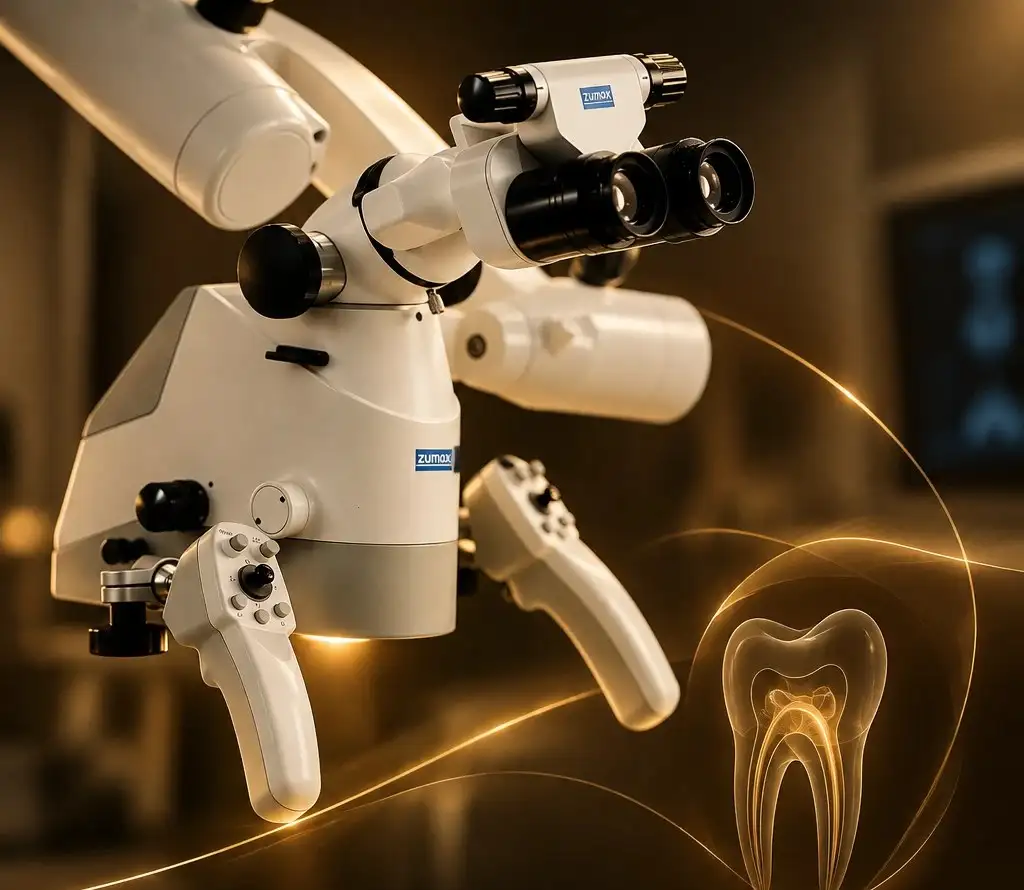
I prepare a suitable opening to reach the pulp chamber and the canal entrances. I use the dental operating microscope to help see fine detail and deal with canals that are hard to find or reach.
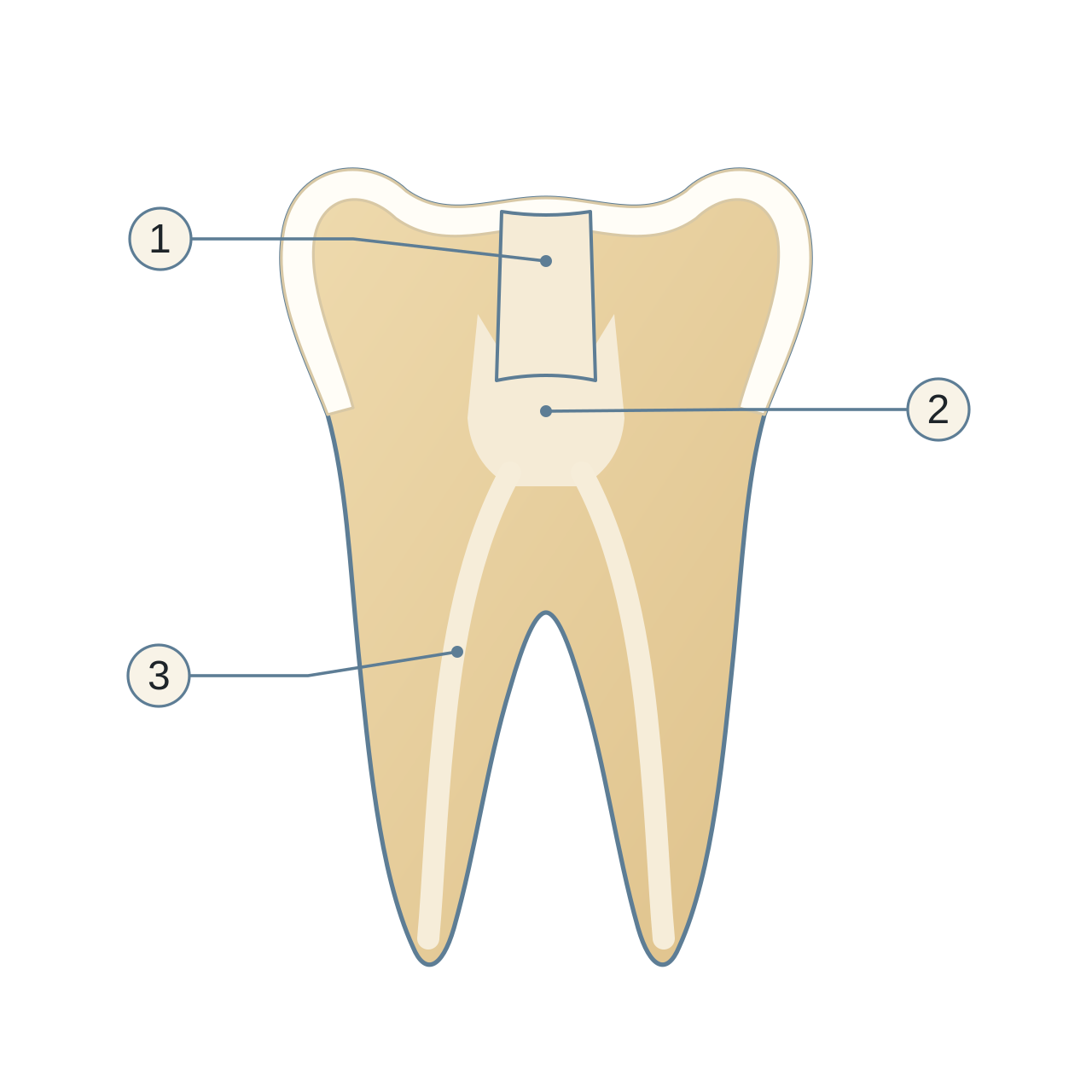
- Access opening
An opening through the crown into the pulp space.
- Pulp chamber
The space within the crown.
- Root canals
Extend within the roots.
5. Cleaning and shaping the canals
The canal lengths are determined, then the canals are cleaned and shaped using dedicated instruments and cleaning solutions that help reduce the bacteria and remaining tissue inside the canals.
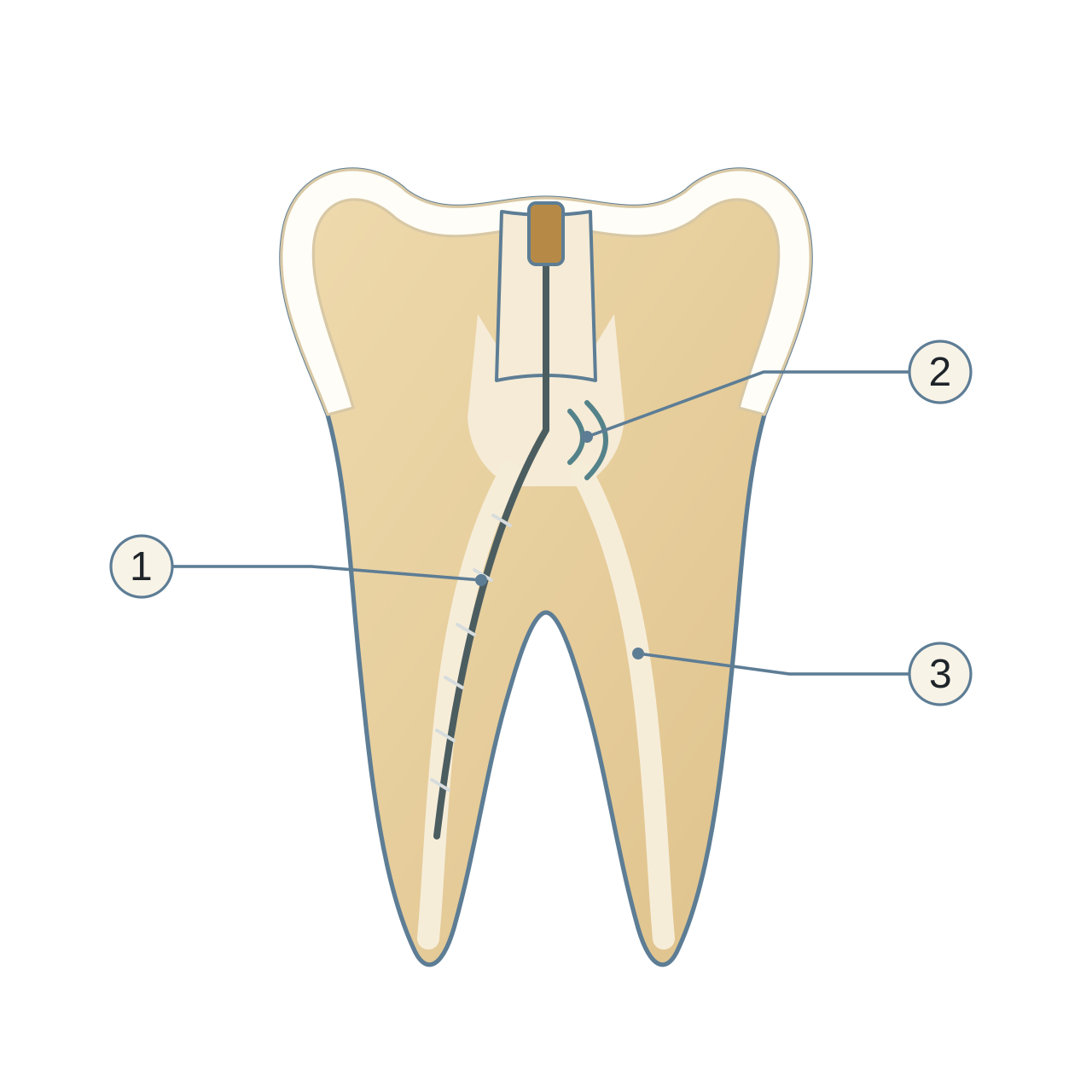
- Instrument within the canal
A simplified view of cleaning and shaping.
- Irrigating solution
Helps clean the root canals.
- Canal wall
Preparation preserves root structure.
6. Filling the root canals
After cleaning and preparation are complete, the canals are filled with materials designed to seal them. More than one visit may be needed, depending on the nature of the case.
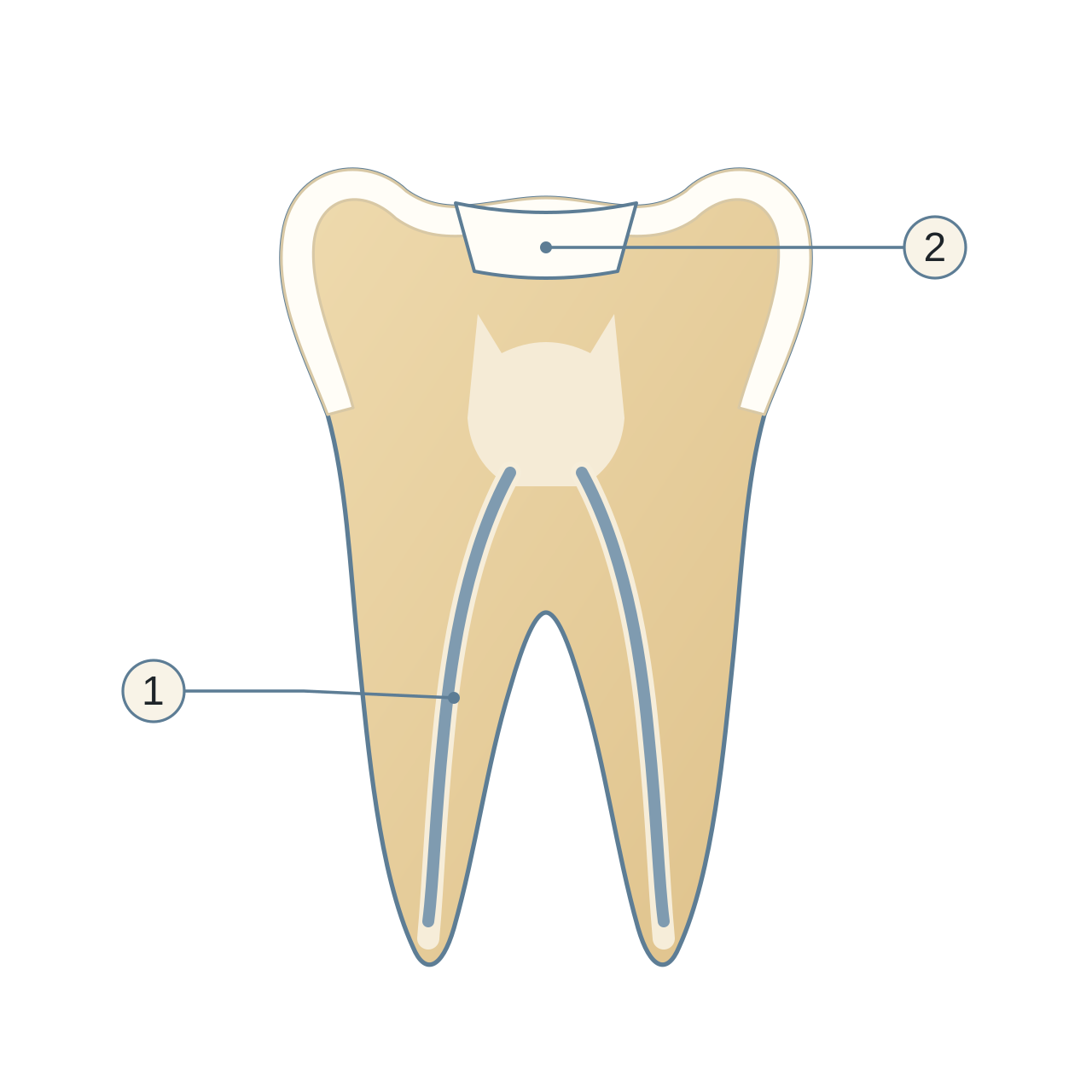
- Root canal filling material
Fills the canals after cleaning and shaping.
- Coronal restoration
Seals the access opening.
7. Restoring the tooth after root canal treatment
After root canal treatment, the tooth needs a suitable final restoration to protect it from leakage and fracture and to restore its function.
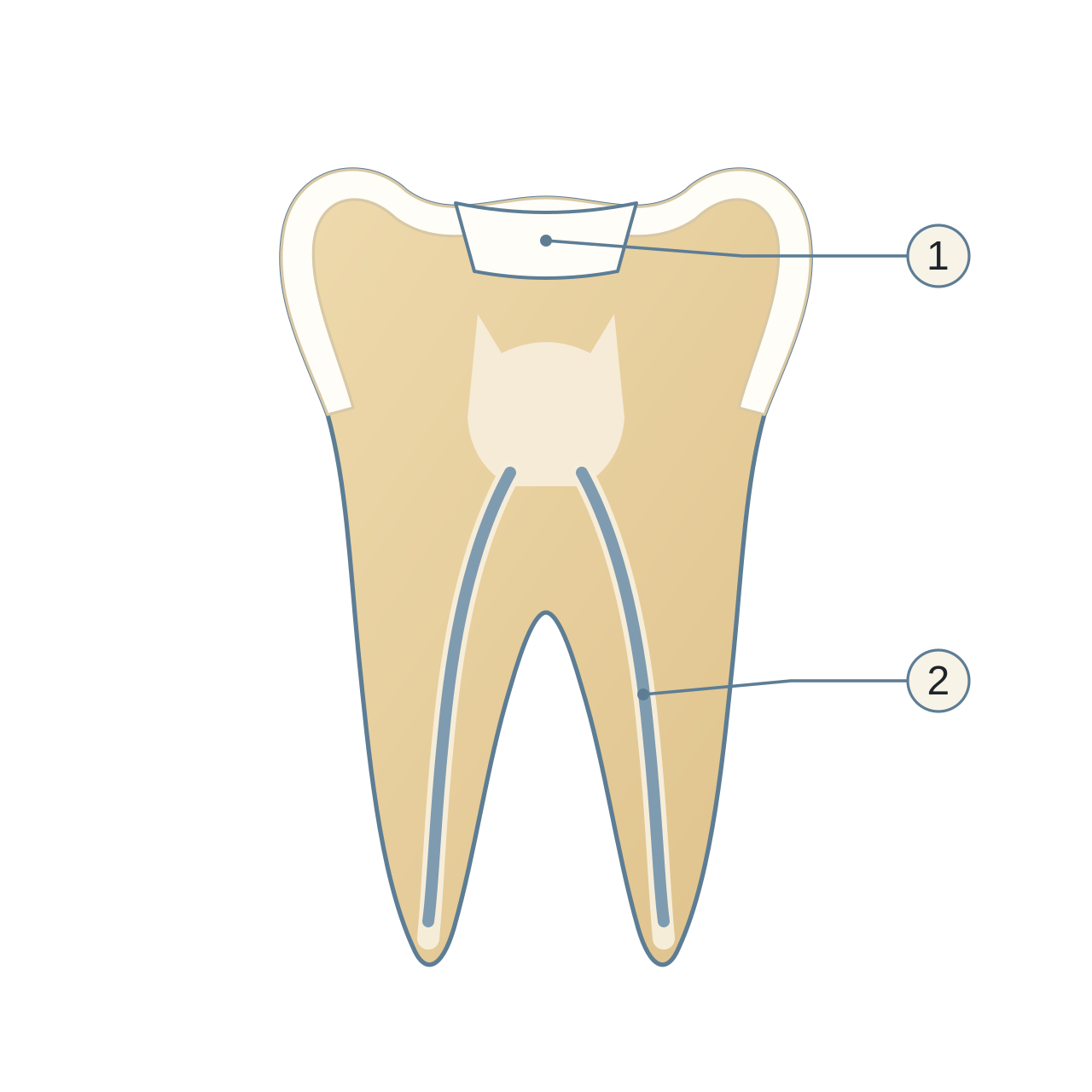
- Definitive restoration
Selected for the condition of the tooth.
- Root canal filling
Within the roots.
The restoration may be a direct filling, an indirect restoration or a crown, depending on how much tooth structure remains, the tooth's position and the forces placed on it.
Is a root canal painful?
Root canal treatment is performed under local anaesthesia to help keep you comfortable. Some teeth, particularly those with severe pulpal inflammation, may need additional anaesthetic techniques. Tell your dentist immediately if you feel pain so they can assess and adjust the anaesthesia as needed.
Some discomfort when chewing may occur in the days after treatment; its severity and duration vary from case to case, but in most cases, the discomfort can be adequately managed with appropriate pain medication. So if you have any pain after treatment, do not hesitate to contact your treating doctor.
How many visits does root canal treatment need?
Some cases can be completed in one visit, while others need two or more.
The number of visits depends on the condition of the tooth, the number and shape of the canals, the presence of infection or complications, and the procedures needed to complete the treatment.
I explain the expected plan to the patient after assessing the case and before starting treatment.
What happens after root canal treatment?
After treatment, you may feel some temporary discomfort, especially when chewing.
It is important to follow the doctor's instructions, avoid putting strong chewing force on an unrestored tooth, and complete the final restoration at the right time.
Where there is inflammation around the end of the root, confirming healing may require clinical and radiographic follow-up over the following months.
Regular follow-up of root canal treatment carried out in the clinic is provided at no additional charge.
Is root canal treatment better than extraction?
When a tooth can be treated and restored, keeping it may be a suitable choice instead of extracting it.
However, some teeth may not be savable because of deep fractures, major loss of tooth structure or other problems.
I discuss whether the tooth can be treated and the available alternatives, including extraction and replacement when needed, before making the decision.
Frequently Asked Questions
Can a tooth need a root canal without any pain?
Yes. The pulp may lose its vitality or an infection may develop around the root without obvious symptoms, and the problem is discovered during an examination or imaging.
Does every root-treated tooth need a crown?
No. The type of final restoration depends on the tooth's position, how much tooth structure remains and other factors. Some teeth need a crown or a restoration that covers the cusps, while a suitable filling may be enough in other cases.
Can all the canals be treated in one visit?
This is possible in some cases, but the number of visits is not decided in advance for every patient. It depends on the complexity of the canals and the clinical situation.
Could the tooth need root canal retreatment in the future?
Yes. In some cases a previous problem may persist or a new infection may appear, which calls for assessing whether endodontic retreatment or other options are possible.
Does a root canal hurt?
Treatment is done under local anaesthesia. The pain people remember usually comes from the infection itself, before treatment. Mild tenderness afterwards typically settles within a few days.
How long does a visit take?
It varies with the tooth and the number of canals, and is often around one to two hours.
Book an appointment to assess your case
If you have tooth pain, or your dentist has told you that you may need a root canal, you can book an appointment for an assessment and a discussion of treatment options.
To book or ask a question: contact me on WhatsApp or by phone.
References
Related reading


Medical notice: the information here is for general health education and is not a substitute for an examination and assessment by a dentist. If you notice any symptoms or changes in your teeth or gums, even if they seem minor, do not ignore them; consult a dentist to assess them and decide whether they need treatment.