
What is endodontic microsurgery (apicoectomy)?
In some cases, inflammation around the end of the root may persist despite root canal treatment or retreatment. When treatment from inside the tooth is not possible or suitable, microsurgery on the root may help treat the problem while keeping the tooth.
This surgery is done to reach the end of the root directly, remove the inflamed tissue, then treat and seal the end of the root when needed, using the dental operating microscope and fine instruments.
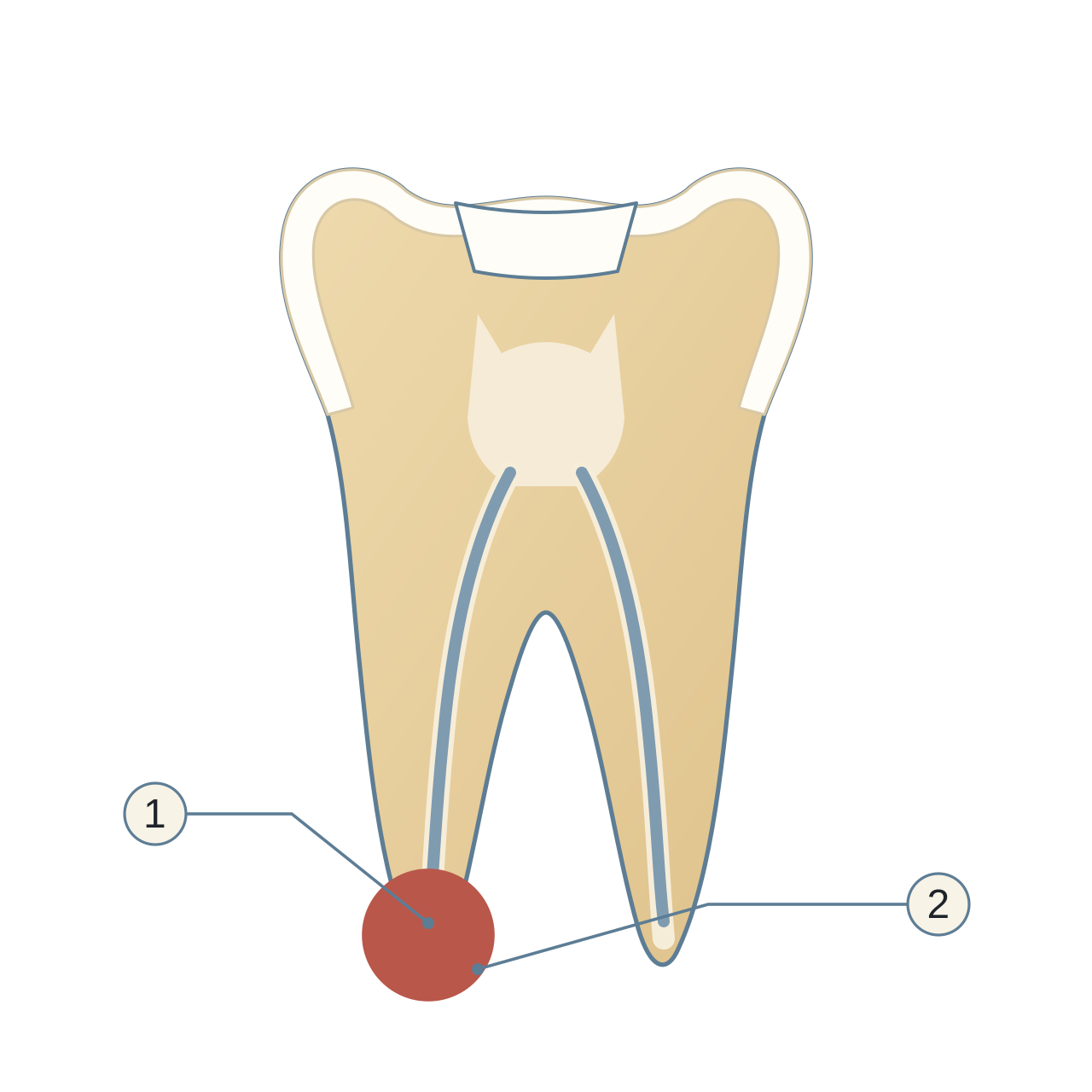
- Root end
The site of surgical treatment when indicated.
- Surrounding tissues
Assessed together with the tooth.
When do I turn to surgery?
Surgery may be an option in certain situations, including:
- Persistent inflammation around the end of the root after root canal treatment, when nonsurgical retreatment is not the most suitable option.
- The canals cannot be reached from inside the tooth because of obstacles or particular clinical circumstances.
- A problem at the end of the root that needs direct intervention after the assessment is complete.
- The need for a surgical assessment of a case that cannot be adequately diagnosed or treated by conventional methods.
Before deciding, I assess the condition of the tooth, the roots and the surrounding bone, and whether the tooth can be restored and kept.
How is the surgery done?
The details of the surgery vary with the case, but it may include:
- Numbing the area with local anaesthetic.
- Moving the gum aside to reach the bone around the end of the root.
- Reaching the affected area and removing the inflamed tissue.
- Removing a small part of the end of the root when needed (Apicoectomy).
- Examining the cut surface of the root with the dental operating microscope.
- Preparing the end of the root canal (Root-End Preparation).
- Placing a root-end filling.
- Returning the gum to its position and securing it with stitches.
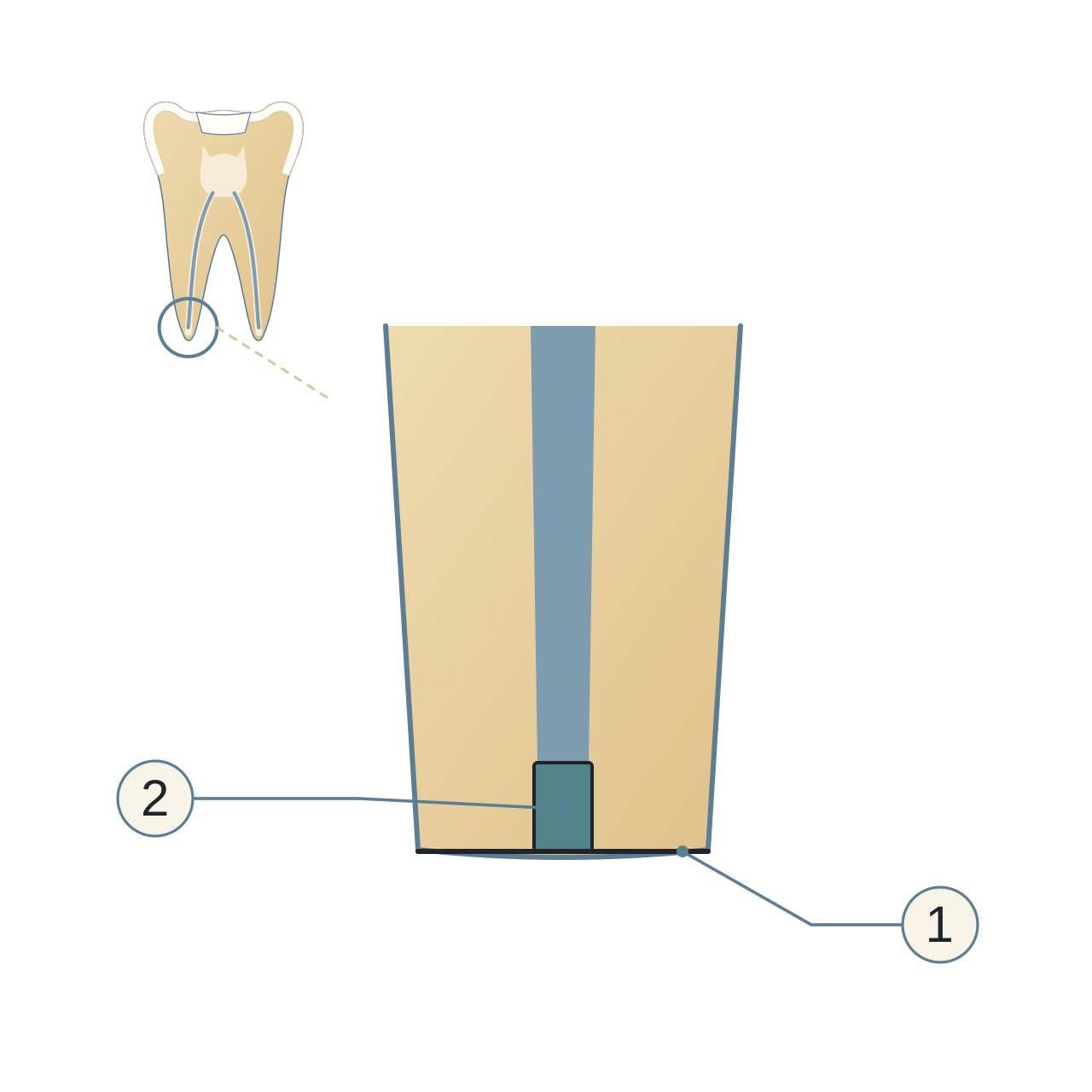
- Resected root end
A simplified enlarged section.
- Root-end filling
Seals the prepared end of the canal.
Not all cases need the same steps, and the details of the procedure are decided according to the diagnosis and the treatment plan.
What to expect after surgery?
Some discomfort or swelling may occur during the first days. The patient is given instructions for caring for the area after surgery, and appointments for removing stitches and for follow-up are set according to the case.
Assessing the healing of the bone and the tissues around the root may need clinical and radiographic follow-up over several months or longer.
Is surgery the first option?
Not necessarily. In many cases nonsurgical retreatment of the root canals can be considered, while surgery is more suitable in other cases.
The decision depends on why the problem persists, the condition of the tooth, whether retreatment is possible, and the expected risks and benefits of each option.
To ask a question or book an appointment to assess your case, you can contact me on WhatsApp or by phone.
References
Related reading


Medical notice: the information here is for general health education and is not a substitute for an examination and assessment by a dentist. If you notice any symptoms or changes in your teeth or gums, even if they seem minor, do not ignore them; consult a dentist to assess them and decide whether they need treatment.