Decay can reach deep layers of the tooth before clear pain appears. But decay being close to the nerve of the tooth does not always mean root canal treatment is the only option.
How does decay progress?

Decay usually starts in the enamel, may spread into the dentine and then approach the pulp (nerve). Symptoms and how fast it develops depend on several factors; there may be sensitivity to cold or sweet foods, or the patient may notice no symptoms at all.
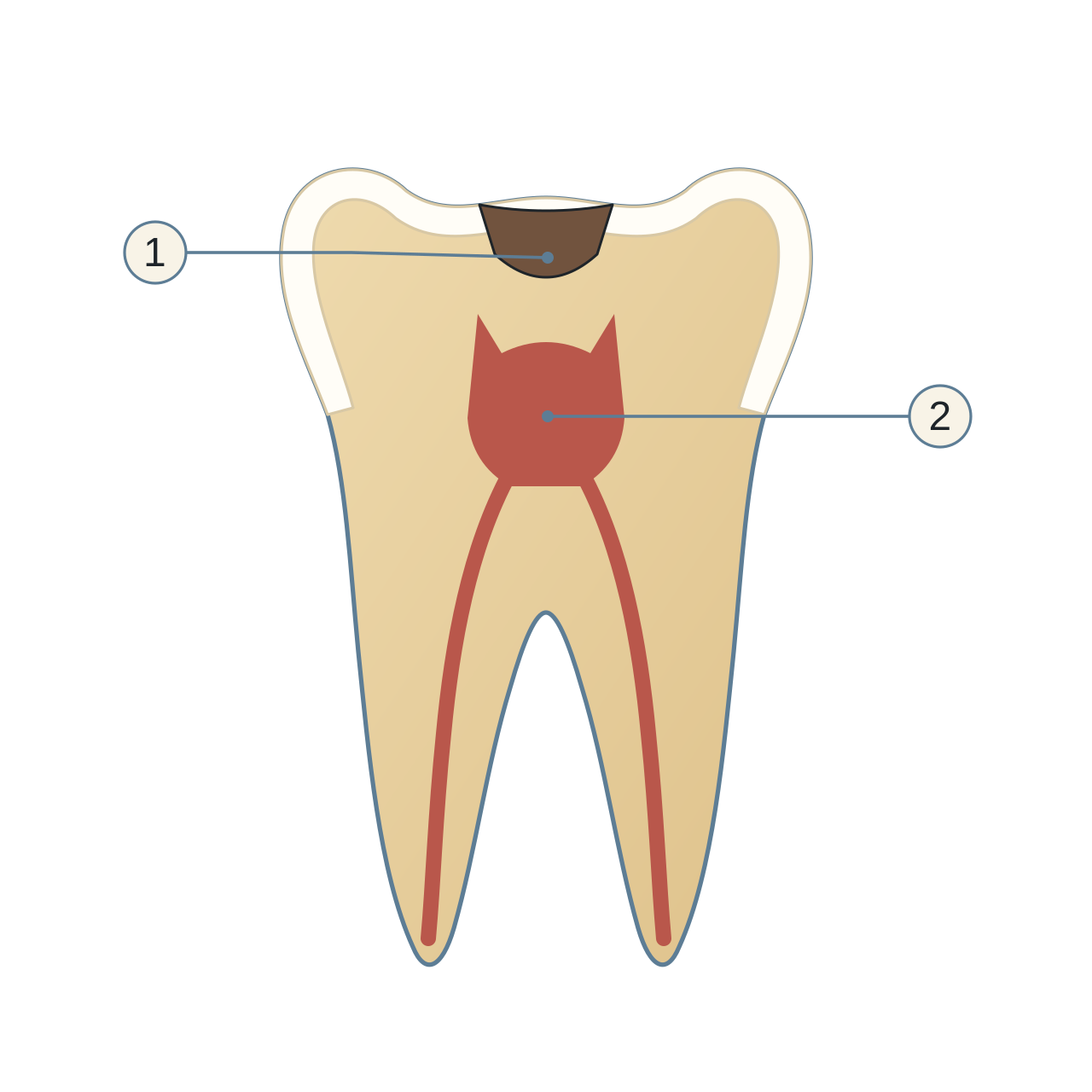
- Caries involving dentine
Extends beneath the enamel.
- Dental pulp
No pulp exposure is shown in this example.
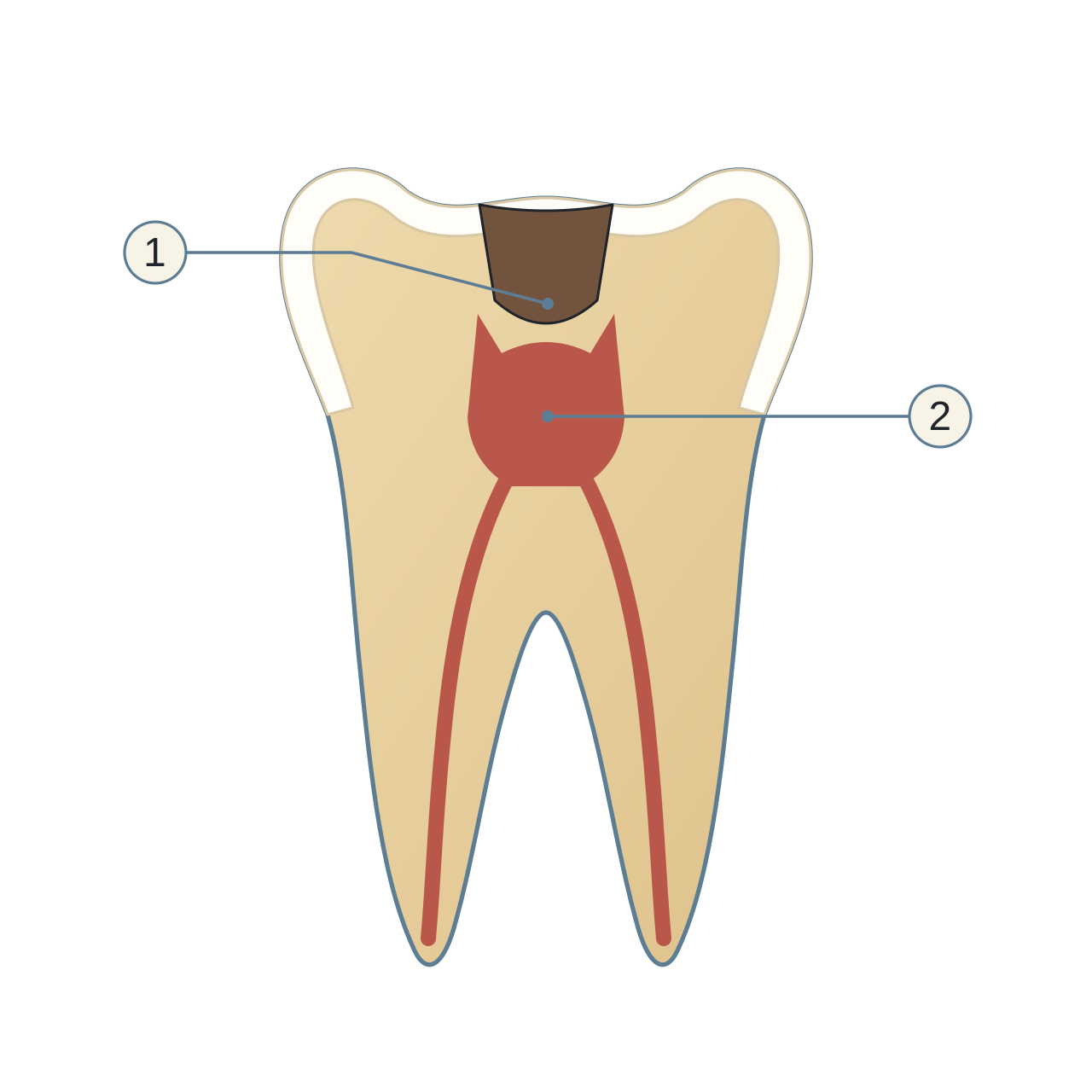
- Deep caries
Close to the pulp in this example.
- Dental pulp
The image alone does not determine pulp status or treatment.
Can the dental pulp be preserved?
In suitable cases the decay can be removed and the tooth restored while preserving the vitality of the pulp, and vital pulp therapy procedures (Vital Pulp Therapy) may be used according to the diagnosis and the condition of the tissues. The decision is not made from the depth of the cavity or the X-ray image alone.
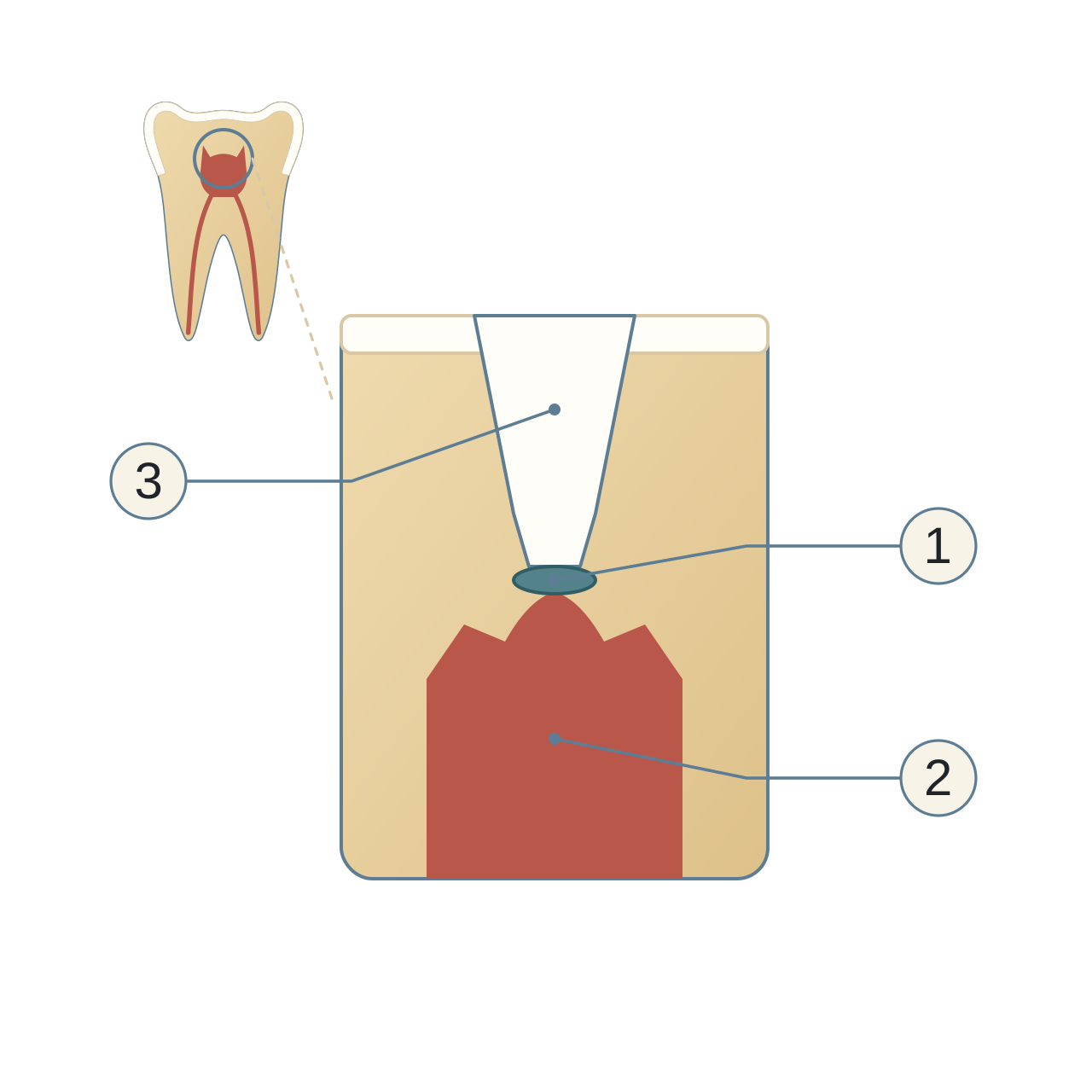
- Pulp capping material
An example of direct pulp capping in a selected case.
- Remaining pulp
Preserving its vitality is the aim of this procedure.
- Coronal seal
Part of the pulp preservation procedure.
When is a root canal needed?
A root canal may be recommended if tests show inflammation of the nerve that is not expected to heal, or pulp necrosis (death of the pulp tissue) and its infection, while considering other options suitable for the case.
How is treatment decided?
I review the symptoms, examine the tooth and surrounding tissues, use pulp tests and X-rays when needed, and then assess whether the tooth can be restored and its vitality preserved.
How do you reduce the chance of decay?
Clean your teeth with a fluoride toothpaste twice a day, clean between your teeth, reduce how often you have sugars and sweetened drinks, and keep to regular check-ups according to your dentist's assessment.
The takeaway
The earlier a problem can be diagnosed before it spreads, the more options there are for keeping the tooth. Early assessment is better than waiting for severe pain.
Related reading


Core treatments

Medical notice: the information here is for general health education and is not a substitute for an examination and assessment by a dentist. If you notice any symptoms or changes in your teeth or gums, even if they seem minor, do not ignore them; consult a dentist to assess them and decide whether they need treatment.