After root canal treatment, the tissues around the tooth may need a period to recover. The following instructions help you care for the tooth until its restoration and follow-up are complete.
When should you contact the clinic?
If the pain increases instead of improving, swelling appears, you feel that the temporary restoration has broken or come off, or the bite feels uncomfortable, contact the doctor to assess the case.
Call the clinicWhen should you seek urgent care?
If you have difficulty breathing or swallowing, rapidly spreading swelling, or severe allergic symptoms, seek emergency medical care immediately.
What to expect after the visit?

The effect of the anaesthetic may last for some time, and you may feel sensitivity or mild to moderate pain when chewing over the following days. Symptoms differ between patients and on their own do not mean there is a problem.
How do you care for the tooth?
Avoid chewing hard foods on the tooth as long as the final restoration has not been done. Keep cleaning your teeth gently and regularly, and follow the doctor's instructions on pain relievers or medicines if they were prescribed for you.
Avoid chewing until the numbness has worn off to reduce the risk of accidentally biting your lip, cheek or tongue.
- Restoration
According to the plan for the tooth.
- Follow-up
At the intervals recommended for you.
- Communication
If you have concerns.
Why is the final restoration important?
A suitable restoration helps restore the function of the tooth and reduce the risk of leakage and fracture. The type of restoration depends on how much tooth structure remains and its position, and is not necessarily a crown for every tooth.
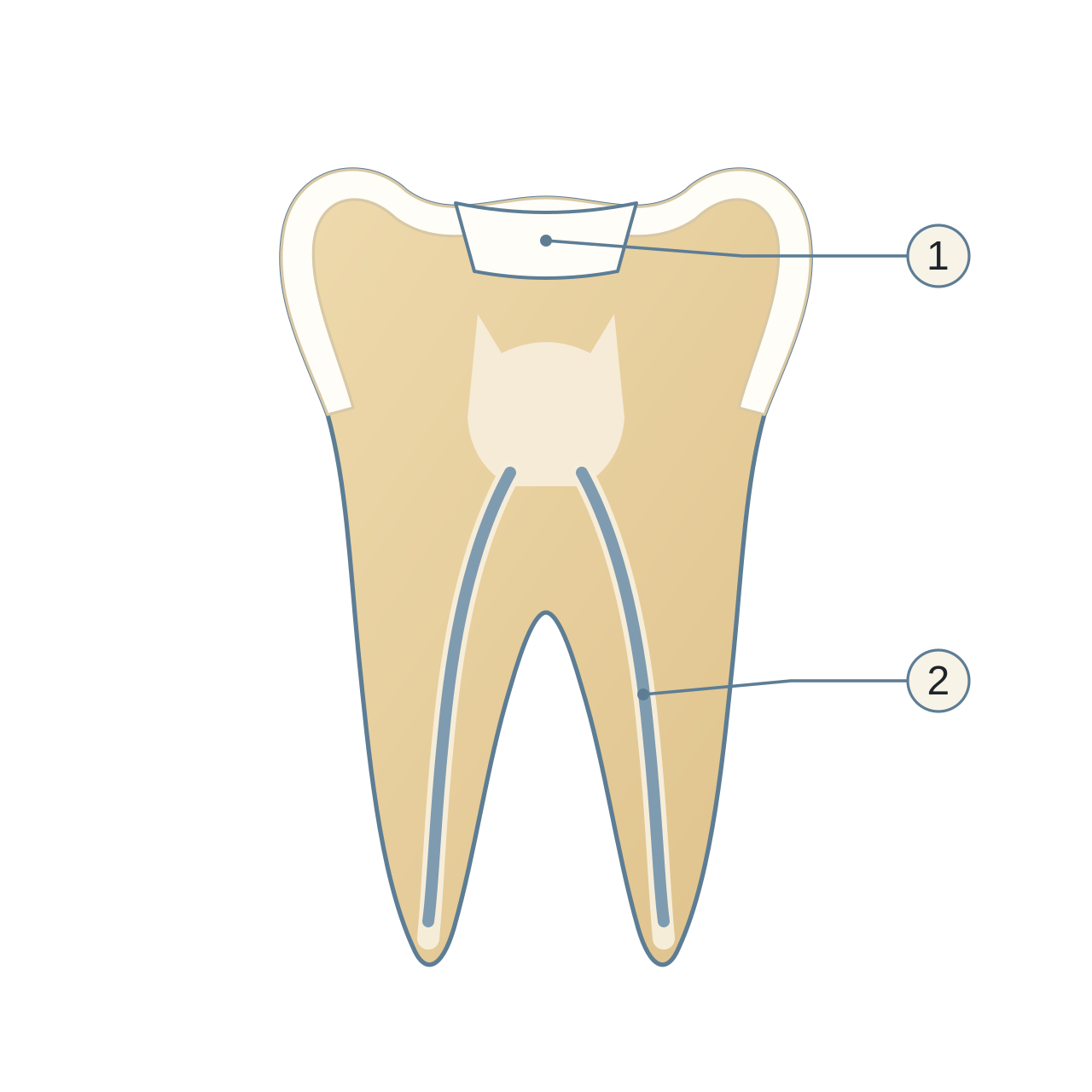
- Definitive restoration
Selected for the condition of the tooth.
- Root canal filling
Within the roots.
Follow-up
Where there is inflammation around the root, clinical or radiographic reviews may be recommended to monitor healing. Complete the restoration plan on time.
Related reading

Core treatments


Medical notice: the information here is for general health education and is not a substitute for an examination and assessment by a dentist. If you notice any symptoms or changes in your teeth or gums, even if they seem minor, do not ignore them; consult a dentist to assess them and decide whether they need treatment.