Not every toothache means you need a root canal. The type of pain tells a lot about what is happening inside the tooth.

Two broad patterns
Short sensitivity that fades quickly after something cold or sweet can be consistent with mild inflammation in some cases, but has many possible causes (for example gum recession, decay, a crack or an old filling). Pain that lingers for minutes after the trigger, comes on its own, or wakes you at night may mean the nerve is inflamed in a way that will not recover by itself.
These are general illustrations, not a diagnosis. Finding the cause needs a clinical examination and imaging, and cases differ from person to person.
Symptoms worth getting checked
- A deep or throbbing ache that is hard to pinpoint
- Pain when biting or pressing
- Heat sensitivity that outlasts the trigger
- Gum swelling or a bad taste in the mouth
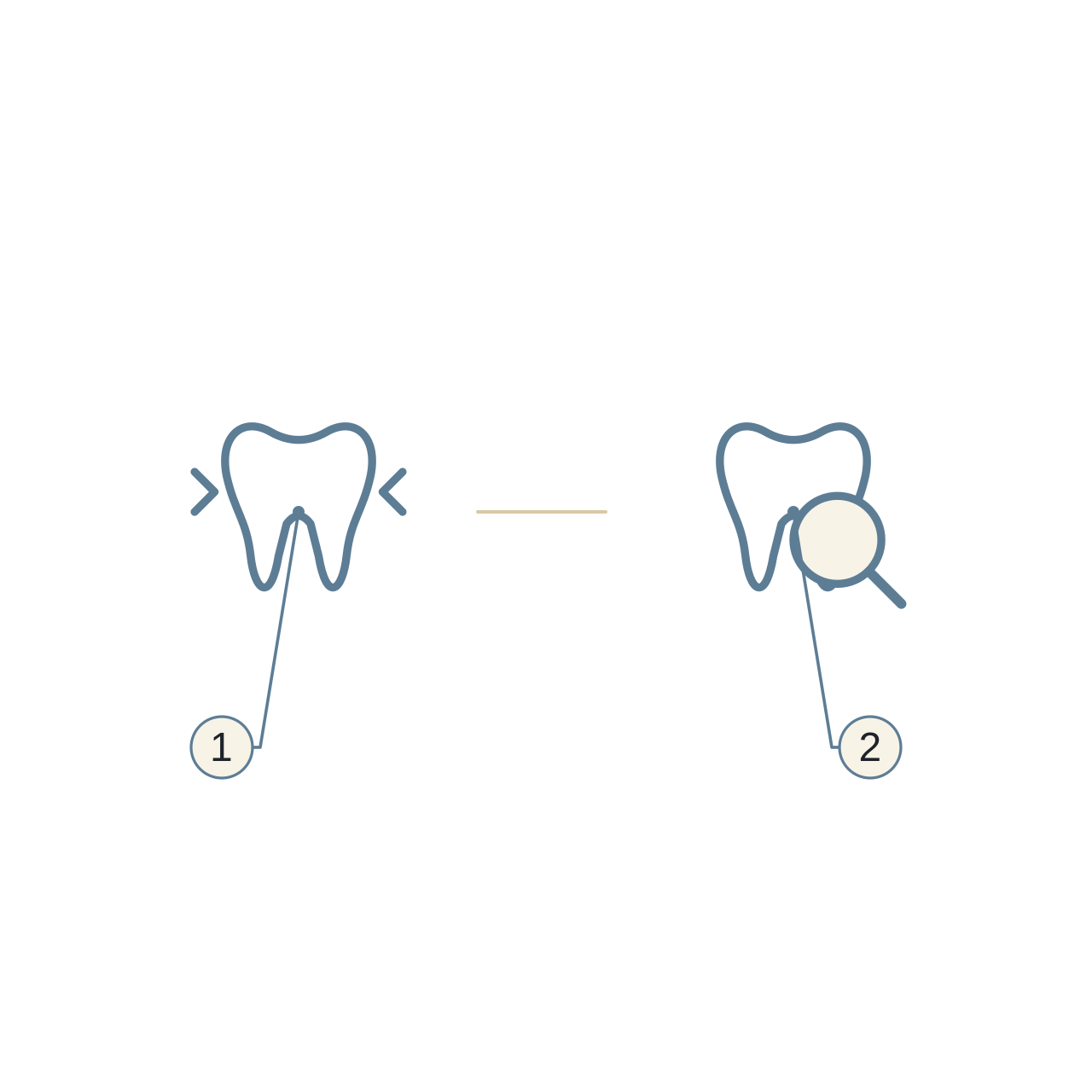
- Symptoms worth assessing
Do not establish the need for root canal treatment.
- Assessing the cause
The examination guides the decision.
If pain comes with facial swelling, fever, or difficulty swallowing or breathing, seek urgent care straight away.
What helps in the meantime
- Simple pain relief as advised by your doctor or pharmacist, taking account of allergies and health conditions
- Avoid chewing on that side and very hot or cold food
- Do not place tablets directly on the gum; this can burn the tissue
These are temporary measures and are no substitute for an examination. The pain will return unless the cause is treated.
Related reading


Core treatments

Medical notice: the information here is for general health education and is not a substitute for an examination and assessment by a dentist. If you notice any symptoms or changes in your teeth or gums, even if they seem minor, do not ignore them; consult a dentist to assess them and decide whether they need treatment.