A tooth abscess is a sign of an infection that needs assessment and treatment of its source. It may appear as a painful swelling or a small opening in the gum from which discharge comes out, but some chronic cases cause little or no pain.

How does an abscess develop?
An infection inside the root canals may lead to inflammation around the end of the root, and a collection of pus may form. But swellings of the gum and teeth have several causes, and an abscess is not diagnosed from its appearance alone. So you should see the doctor as soon as any of these symptoms appears.
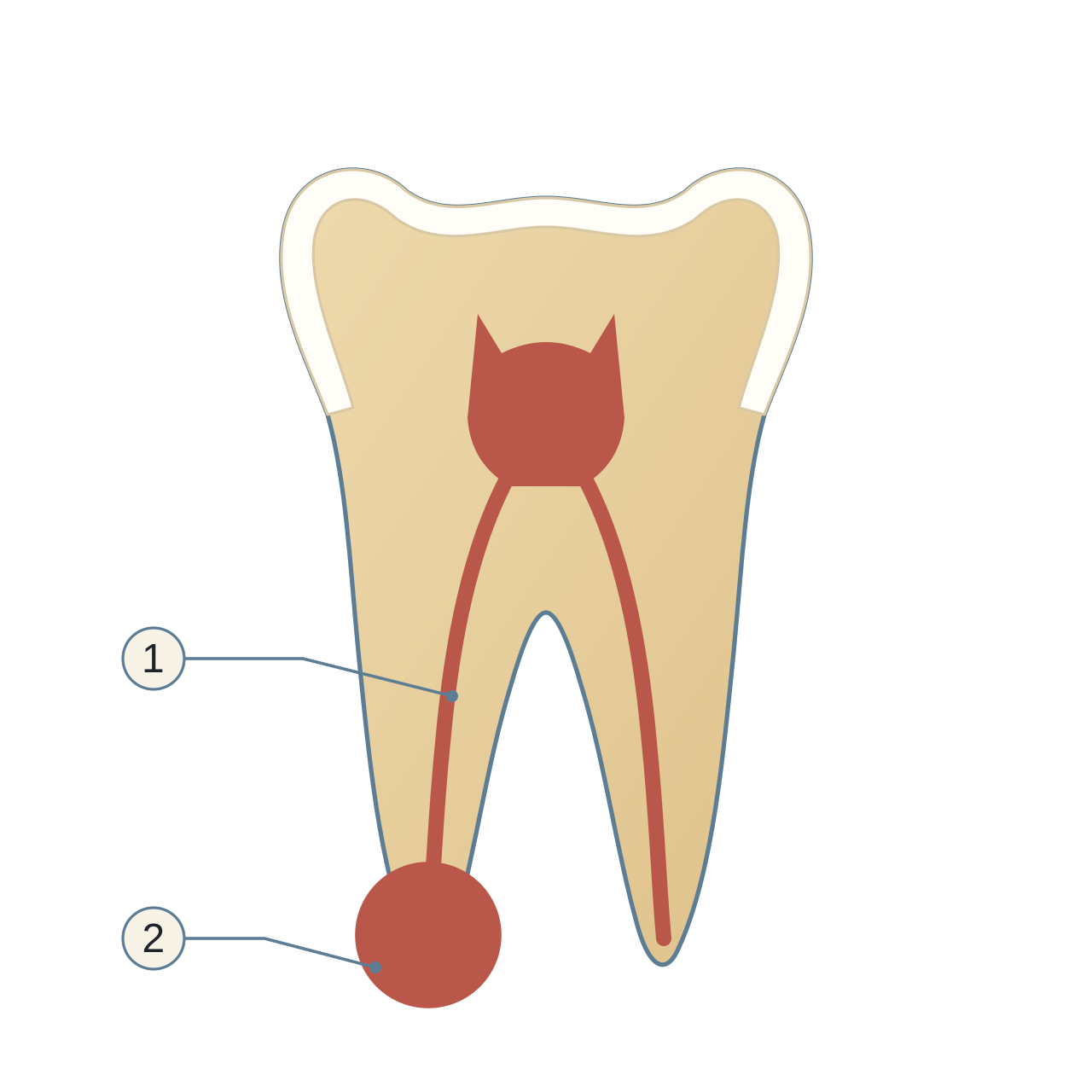
- Root canal
Assessed together with pulp status.
- Periapical tissues
Assessed with the examination and imaging.
What are the possible signs?
Pain on biting or touch, swelling around the tooth or in the face, discharge or a pimple on the gum, an unpleasant taste, or sometimes a raised body temperature. Remember that some chronic abscesses may cause no symptoms or pain. For this reason I always stress the importance of keeping to regular check-ups according to your doctor's assessment.
When is it an emergency?
If the swelling spreads to the face or neck, or comes with difficulty breathing, swallowing or opening the mouth, or with severe general symptoms, go to the medical emergency department immediately.
How is the cause treated?
Depending on the diagnosis, treatment may include opening drainage for the infection when needed, root canal treatment or retreatment of the tooth, or extraction if the tooth cannot be restored. Taking an antibiotic alone is not enough to remove the source of a root canal infection.
Are antibiotics always needed?
No. The doctor decides whether they are needed based on whether the infection is spreading, any general (systemic) symptoms and patient-specific factors. Do not use an antibiotic without a prescription, and do not delay treating the cause.
After Treatment
A follow-up examination and X-rays may be needed to monitor the healing of the tissues around the root. Follow the treatment plan and the instructions specific to your case.
Related reading


Core treatments
Medical notice: the information here is for general health education and is not a substitute for an examination and assessment by a dentist. If you notice any symptoms or changes in your teeth or gums, even if they seem minor, do not ignore them; consult a dentist to assess them and decide whether they need treatment.