My Services
I offer a range of specialised treatments for the dental pulp and the tissues surrounding the roots of teeth, including first-time root canal treatment, retreatment of previously treated teeth, root surgery, and managing cases that need extra procedures because of complex canals or problems caused by earlier treatment.
The steps differ from case to case, and not every patient needs all the procedures listed. The suitable treatment is decided after examination, diagnosis and assessing whether the tooth can be kept.
1. Diagnosis and case assessment

Endodontic Diagnosis & Assessment
Diagnosis is the first step in identifying the source of the problem and knowing whether the tooth needs root canal treatment or another procedure.
- Diagnosis of pulp diseases (Pulpal Diagnosis).
- Diagnosis of inflammation of the tissues around the roots (Periapical Diagnosis).
- Assessment of pain of uncertain origin to determine whether it is odontogenic.
- Diagnosis of cracked teeth and root fractures (Cracked Teeth & Root Fractures).
- Diagnosis of internal and external root resorption (Internal & External Root Resorption).
- Assessment of teeth that have had previous root canal treatment (Previously endodontically treated teeth).
- Assessment of inflammation that may originate from the teeth and extend to the sinuses (Odontogenic Sinusitis).
- Assessment of whether the tooth can be kept and restored (Tooth Restorability Assessment).
The assessment may include clinical tests and X-rays, with the help of cone-beam computed tomography (CBCT) when there is a clear diagnostic need.
2. Root canal treatment and complex cases

Root Canal Treatment & Complex Canal Anatomy
Root canal treatment involves removing the affected or inflamed tissue from the root canals, and cleaning, preparing and filling the canals according to the condition of the tooth.
- Root canal treatment.
- Treatment of narrow and calcified root canals (Narrow & Calcified Canals).
- Treatment of severely curved canals.
- Managing unusual root anatomy (Complex Root Canal Anatomy).
- Finding and treating additional canals (Additional / Missed Canals).
- Finding and treating the second mesiobuccal canal (MB2) in maxillary molars.
- Managing cases where canal entrances are hard to locate (Difficult Canal Location).
- Cleaning, shaping and filling the root canals (Root Canal Cleaning, Shaping & Obturation).
Magnification, ultrasonic instruments and other techniques may be used depending on how difficult the case is, and not necessarily in the same way for all teeth.
3. Root canal retreatment and correcting problems from previous treatment

Endodontic Retreatment & Management of Procedural Complications
A tooth may need retreatment because of persistent inflammation around the root, an untreated canal, or problems related to the earlier treatment or restoration. Whether retreatment is possible is decided after assessing the condition of the tooth.
- Nonsurgical root canal retreatment (Nonsurgical Endodontic Retreatment).
- Removing previous root canal filling materials (Root Canal Filling Removal).
- Finding canals that were not discovered or treated before (Missed Canal Management).
- Removing broken instruments from inside the canals where possible (Separated Instrument Retrieval).
- Bypassing broken instruments when removing them is not suitable (Separated Instrument Bypass).
- Removing posts and cores inside the roots (Intraradicular Post Removal).
- Repairing perforations in the roots or the floor of the pulp chamber (Root / Furcation Perforation Repair).
- Managing ledges inside the canals (Ledge Management).
- Assessing and managing deviation of the canal path during previous treatment (Canal Transportation Assessment & Management).
- Re-treating calcified canals, or canals not fully treated in previous attempts.
Removing the broken instrument or the post is not the right option in every case, since the benefit of the procedure is weighed against the risk of weakening the root or causing additional complications. The final treatment plan is decided by the doctor.
4. Vital pulp therapy and immature teeth

Vital Pulp Therapy & Immature Permanent Teeth
In some cases the vitality of the pulp can be preserved instead of removing it completely. Permanent teeth whose roots have not finished developing also need treatment procedures that differ from usual root canal treatment.
- Vital pulp therapy (Vital Pulp Therapy, VPT).
- Direct pulp capping.
- Partial pulpotomy.
- Full pulpotomy.
- Preserving pulp vitality in deep decay when the case allows (Pulp Preservation in Deep Caries).
- Managing immature permanent teeth (Management of Immature Permanent Teeth).
- Creating an apical barrier in an immature permanent tooth with a necrotic pulp (apexification).
- Forming an apical barrier with suitable biomaterials (Apical Barrier Technique).
- Regenerative endodontic procedures (Regenerative Endodontic Procedures, REPs).
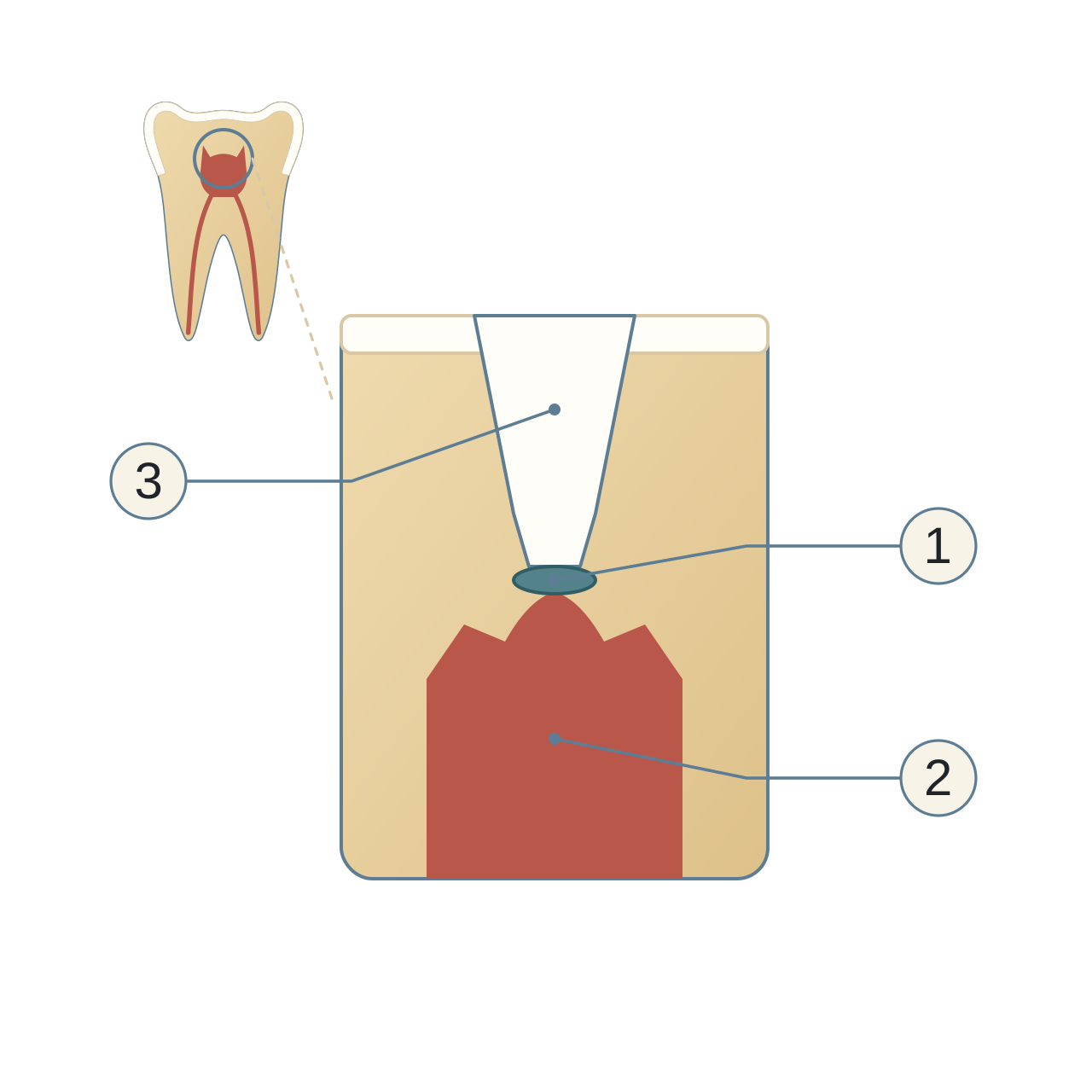
- Pulp capping material
An example of direct pulp capping in a selected case.
- Remaining pulp
Preserving its vitality is the aim of this procedure.
- Coronal seal
Part of the pulp preservation procedure.
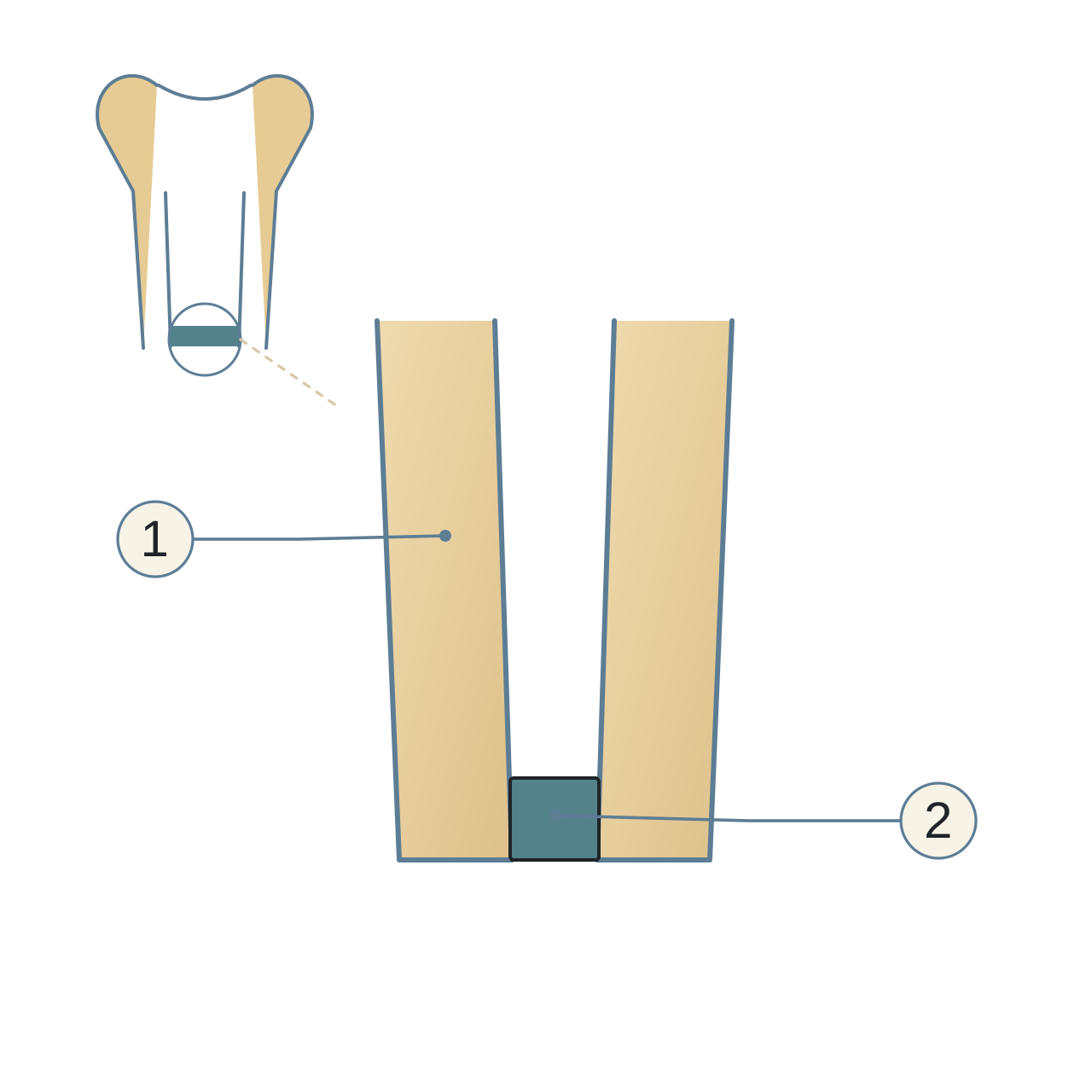
- Immature root walls
An enlarged schematic section.
- Apical barrier
Does not imply continued root development.
The choice of treatment depends on the condition of the pulp, the stage of root development, the nature of the injury or inflammation, and how suitable the tooth is for the procedure; the final treatment plan is decided by the doctor.
5. Endodontic microsurgery

Endodontic Microsurgery
When the problem cannot be solved by treating the canals from inside the tooth, or nonsurgical retreatment is not the most suitable option, root surgery may be one of the possible options after studying the case.
- Root-end microsurgery (Endodontic Microsurgery).
- Removing (cutting) the root tip (Apicoectomy / Root-End Resection).
- Removing inflamed tissue around the end of the root during surgery (Periapical Curettage).
- Preparing the site for the root-end filling (Root-End Preparation).
- Sealing the end of the root canal (root-end filling).
- Assessing surgical results and following tissue healing (Post-Surgical Healing Assessment).
Whether these procedures are suitable depends on the condition of the roots, bone and gum, and whether the tooth can be restored and kept after the intervention.
6. Dental injuries and root resorption

Dental Trauma & Root Resorption
Dental injuries may affect the pulp of the tooth, the root or the supporting tissues, and some complications may appear a while after the injury. So treatment and follow-up need a plan that suits the type of injury and the stage of development of the tooth.
- Assessing dental injuries caused by accidents (Traumatic Dental Injuries).
- Diagnosing tooth displacement injuries (Luxation Injuries).
- Managing cases of complete avulsion of permanent teeth.
- Assessing root fractures.
- Monitoring pulp vitality after injuries (Pulp Monitoring After Trauma).
- Treating pulp and root complications resulting from injuries (Endodontic Management of Dental Trauma).
- Diagnosing and treating internal root resorption.
- Diagnosing and treating selected types of external root resorption.
- Assessing external cervical resorption.
Intervention differs according to the type of injury, when it happened and the condition of the tooth. Some patients may need combined treatment with other specialties.
7. Internal bleaching of root-treated teeth

Internal bleaching / nonvital tooth bleaching
The colour of a tooth may change after a previous injury or root canal treatment. In some cases the colour can be improved by internal bleaching, without immediately needing to cover the tooth with a crown or carry out extensive cosmetic restoration.
- Assessing the causes of tooth discoloration after root canal treatment (Discoloration Assessment).
- Internal bleaching of non-vital teeth (Internal Bleaching).
- Staged internal bleaching when suitable for the case (Walking Bleach Technique).
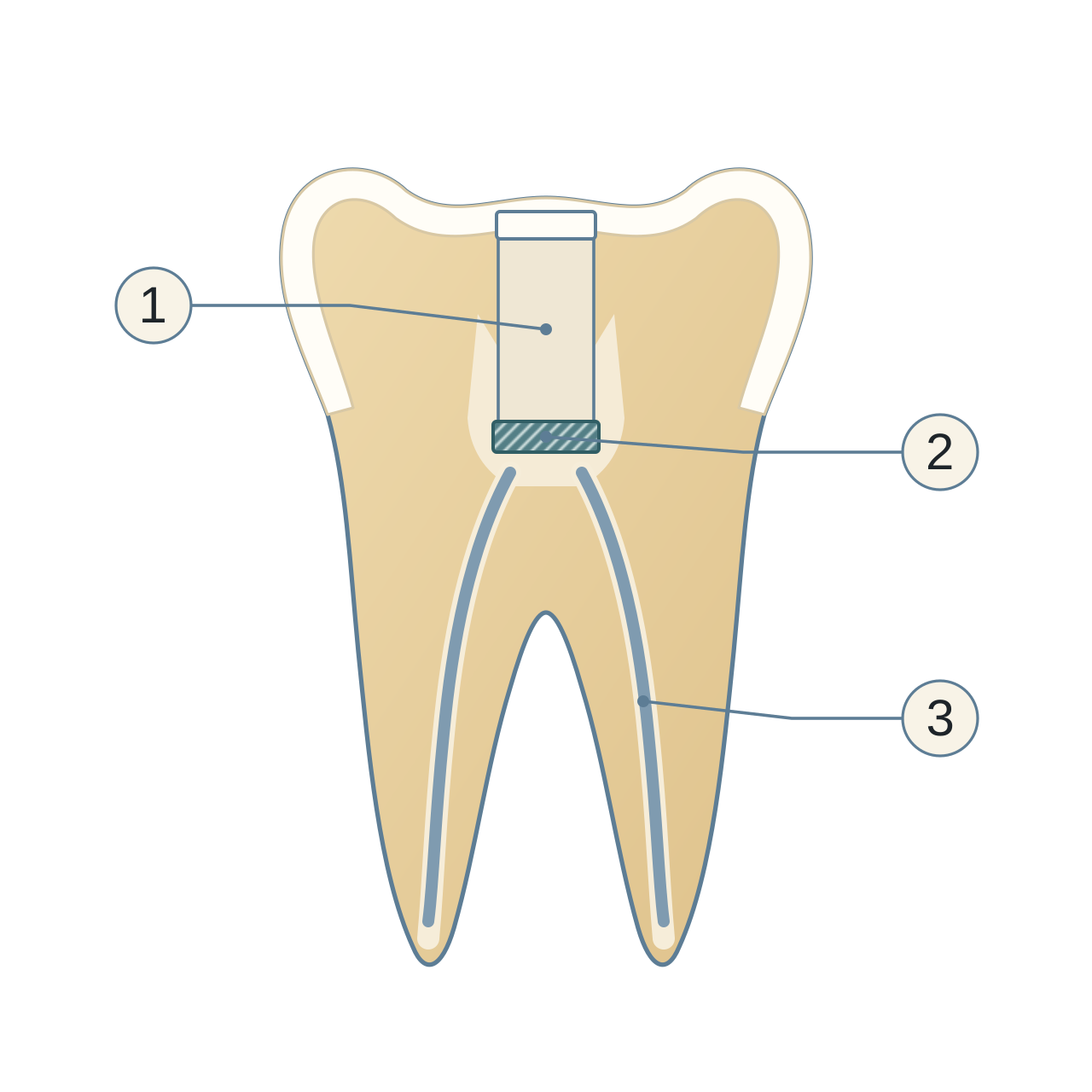
- Bleaching chamber
Within the crown of a root-filled tooth.
- Protective cervical barrier
Separates the chamber from the root filling.
- Root canal filling
Remains separate from the bleaching chamber.
This procedure does not suit all teeth, and the decision is made after checking the condition of the tooth, its restoration and factors that may affect the result.
8. Follow-up and assessing treatment outcomes

Endodontic Follow-up & Outcome Assessment
Follow-up is part of care after root canal treatment, especially in cases that had inflammation around the root or in which retreatment or surgery was carried out.
- Clinical follow-up after root canal treatment (Clinical Follow-up).
- Radiographic assessment of healing of the tissues around the roots (Radiographic Healing Assessment).
- Following up retreatment cases (Retreatment Follow-up).
- Following bone healing after root surgery (Post-Surgical Follow-up).
- Long-term follow-up of some dental injuries and root resorption cases (Long-Term Trauma & Resorption Follow-up).
- Assessing the need for additional intervention if the problem persists or new symptoms appear.
- Coordinating with the treating dentist to complete the suitable final restoration (Definitive Coronal Restoration).
The timing of reviews, examinations and X-rays is set according to the type of case and its response to treatment.
Regular follow-up of root canal treatment carried out in the clinic is provided at no additional charge.
Do you need an assessment of your case?
If you have a problem with the nerve of a tooth, or have had root canal treatment before and need reassessment, you can contact the clinic to arrange an appointment. The suitable procedure is decided after the examination, not from the name of the service alone.
To book or ask a question: contact me on WhatsApp or by phone.