A small crack can cause clear pain when chewing even though the tooth looks sound from the outside. Some cracks do not show clearly on ordinary X-rays, so diagnosis needs more than one method of examination.
Why do teeth crack?

Cracks may be linked to chewing very hard objects, grinding or clenching the teeth, loss of a large part of the tooth structure through decay or a large restoration, or a direct blow. The cause cannot be identified in every case.
What symptoms might you notice?
Possible signs include intermittent pain when biting or when releasing the pressure, irregular sensitivity to cold, and difficulty telling which tooth is responsible for the pain. A crack may also be present without obvious symptoms.
Are all cracks the same?
No. Superficial cracks limited to the enamel differ from a fractured cusp, and from deeper cracks that extend towards the pulp (nerve) or below the gum. A tooth split into two parts, or a vertical root fracture, greatly affects whether the tooth can be kept.
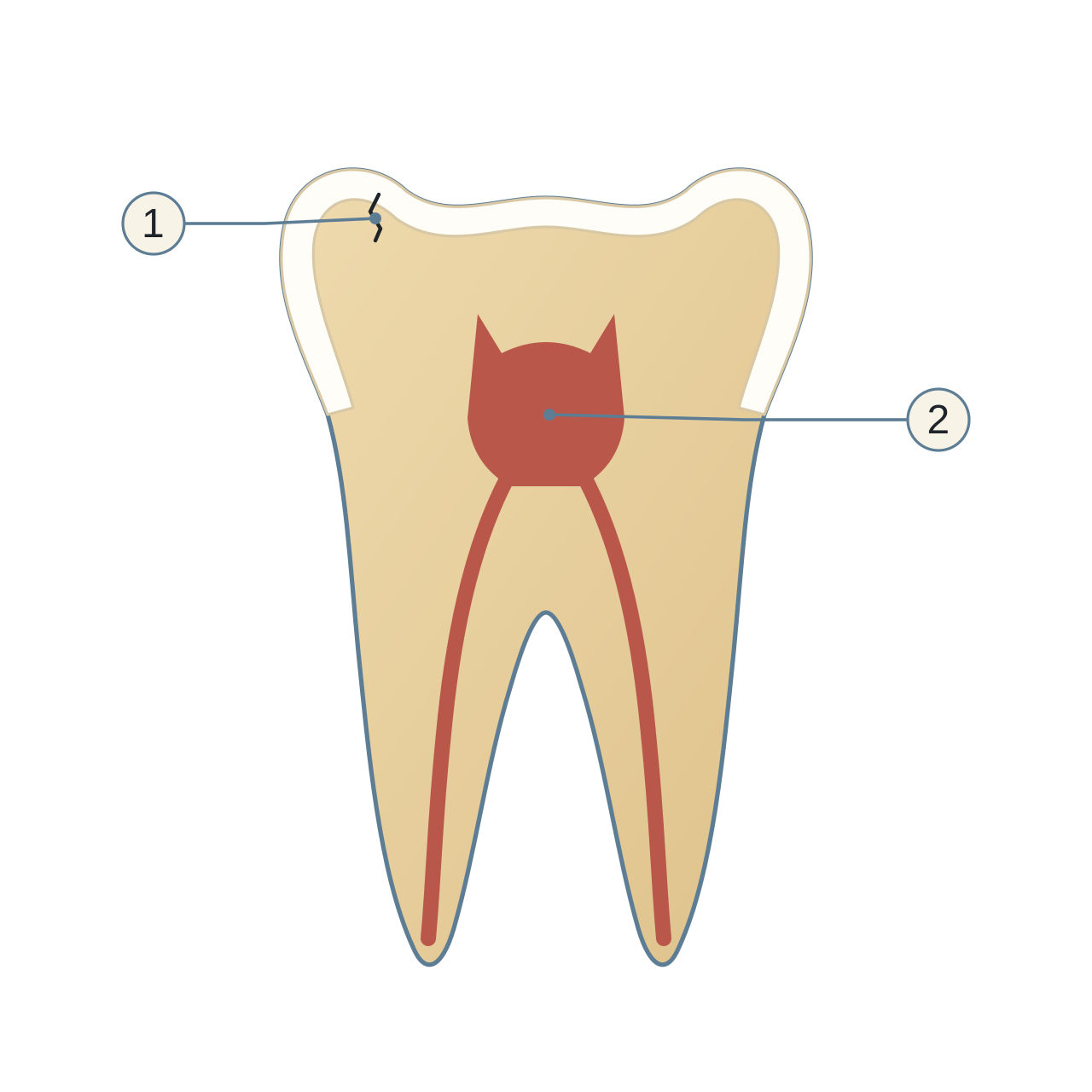
- Enamel craze line
Limited to enamel in this example.
- Dental pulp
The illustrated line does not reach the pulp.
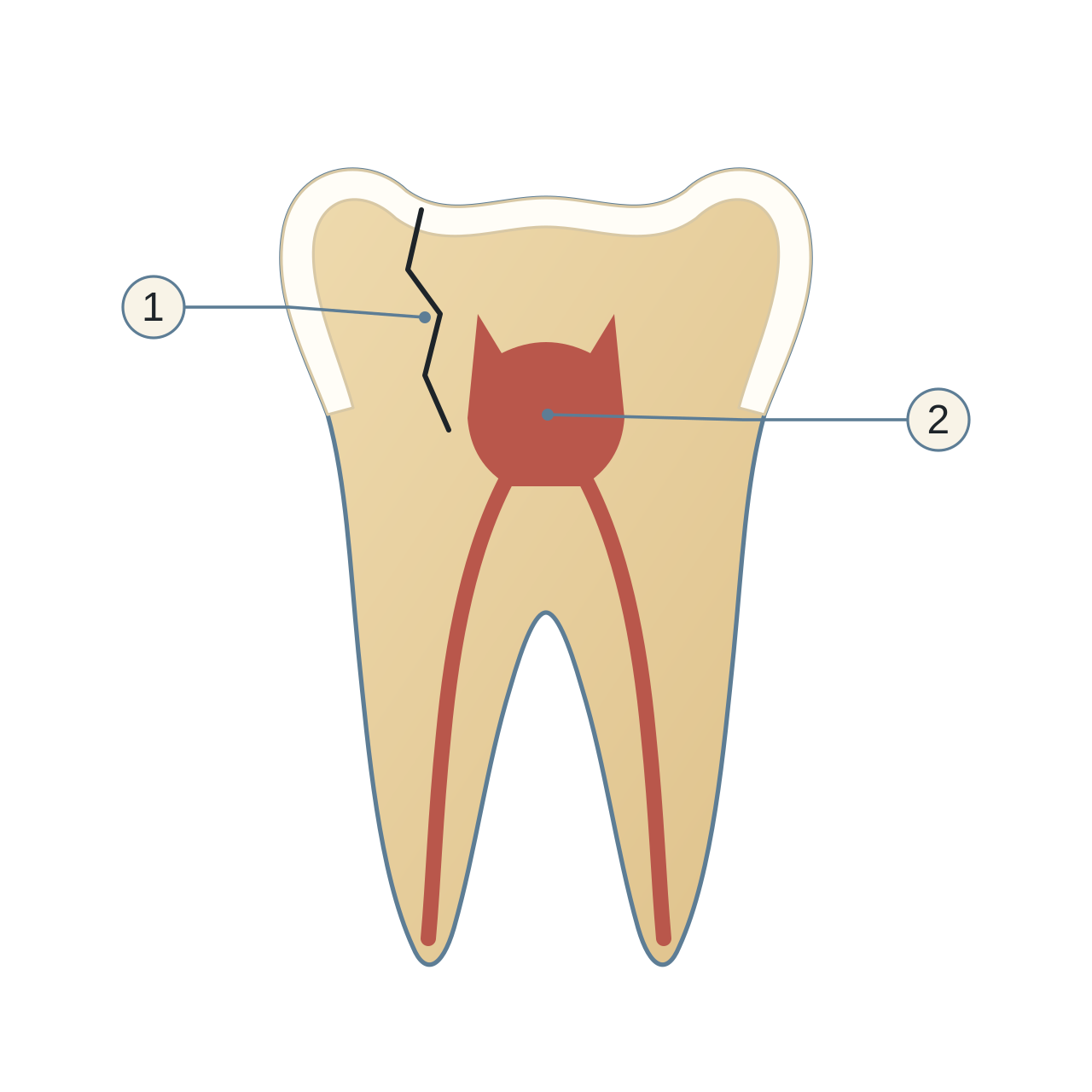
- Crack extending into dentine
One example of crack extent.
- Dental pulp
Its relationship to the crack requires assessment.
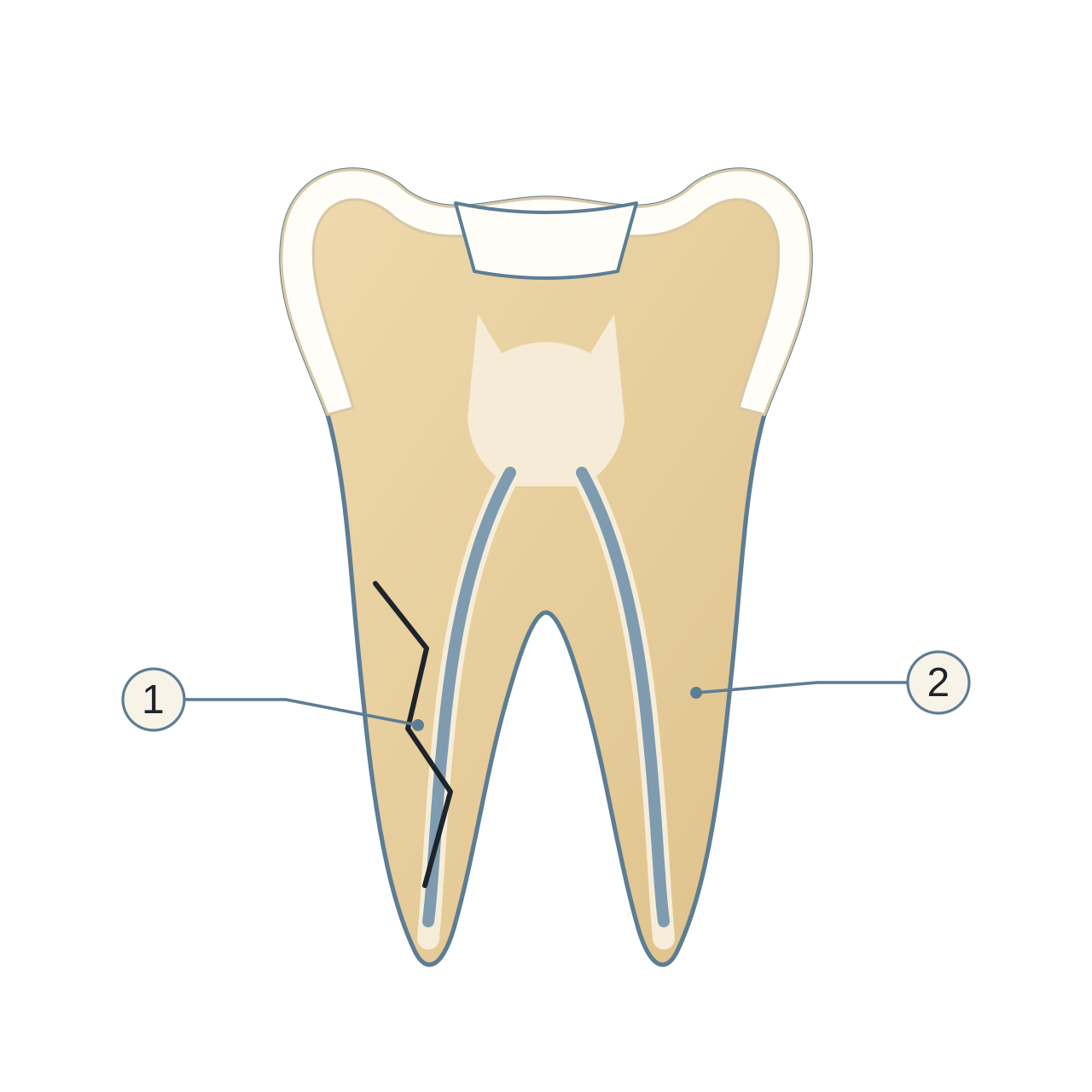
- Vertical root fracture
Runs along the root in this example.
- Root wall
Requires clinical assessment.
How do I diagnose a crack?
I start with a description of the pain and a clinical examination, then bite tests, illumination and magnification, a gum examination and X-rays when needed. Limited-field cone-beam computed tomography (CBCT) can help in selected cases to assess complications or fractures, but it does not reveal every fine crack and is not requested routinely.
What treatment is possible?
A suitable restoration or covering the cusps may be enough in some cases. If the pulp is affected to a degree that calls for root canal treatment, I discuss this with the patient while assessing the depth of the crack and whether the tooth can be restored. Keeping the tooth may not be possible when some fractures extend into the root.
When should you see the doctor?
If you get pain on biting, or notice a fracture or a new change in the tooth, it is best to have it examined without delay; the decision depends on the depth of the crack and the condition of the pulp and surrounding tissues.
References
Related reading


Core treatments
Medical notice: the information here is for general health education and is not a substitute for an examination and assessment by a dentist. If you notice any symptoms or changes in your teeth or gums, even if they seem minor, do not ignore them; consult a dentist to assess them and decide whether they need treatment.